The Ear and the Foot
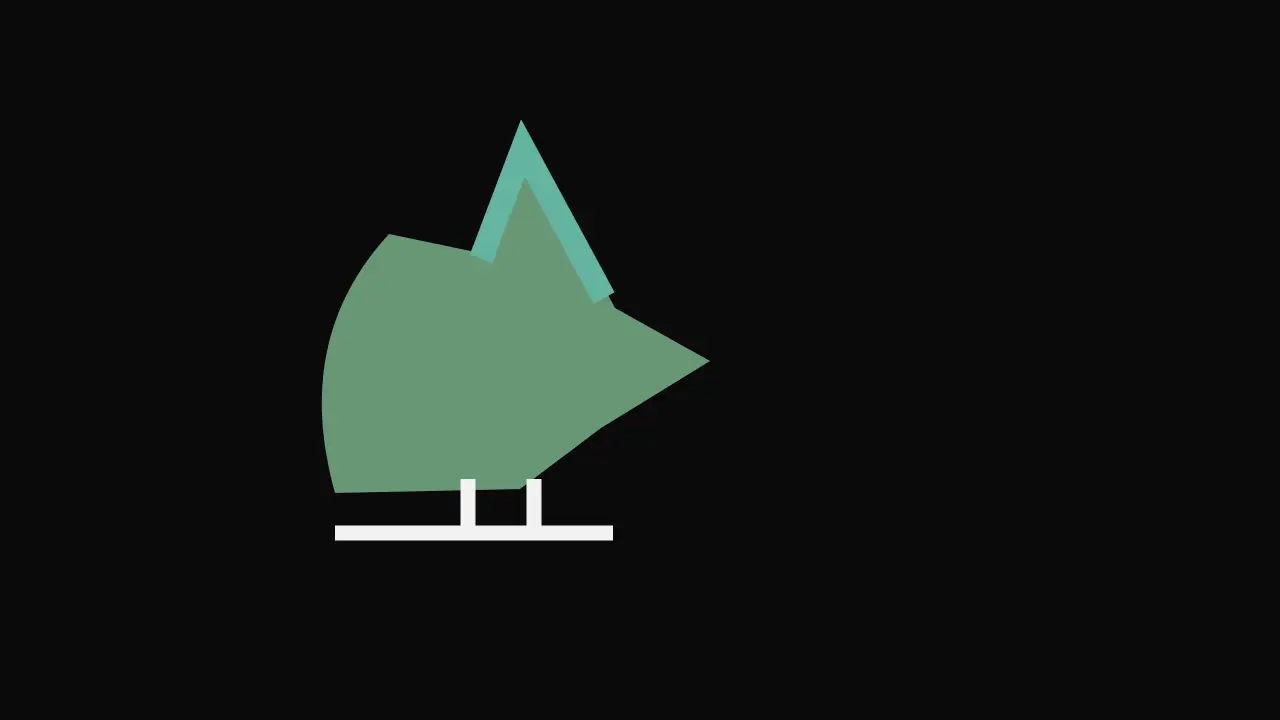
Our first companion animation turned its head toward the keeper and immediately took a step. The animal was easy to read because every visible change meant movement. That made it hard to show curiosity from the safety of the fern bank. The next version leaves the feet still while the ear follows something nearby. The keeper can see where its attention has gone without assuming that the animal has chosen to approach.
Start with a view across the clearing
The keeper enters beside a fallen log. The animal stands beyond it on a dry patch. One ear is easier to see than the other at this angle, and a slightly lighter edge gives it a readable profile against the ferns. On the first pass the nearest ear turns a little toward a footstep. The shadow around the shoulder stays in the same place. The feet do not need to move for the response to be visible.
We put the animal a little farther away than in the first sketch. Its closest foot had originally been hidden by a foreground branch. There was no way to compare the earliest visible cue with a later movement. The edge of the fallen log gives the animal a visible ground reference now. The view remains available if the keeper stops near the approach and stays there for another moment.
Make a route available before looking for a step
A keeper can stop in the open part of the path or continue past the log. Moving close to the bank takes up some of the space the animal would use to turn. The farther stop lets it retain both routes. A second position can bring a shoulder and front foot into view without aiming the whole camera straight at the animal. The body turn follows when a movement actually begins.
We tried a bright icon whenever the animal noticed the keeper. That made the ear cue look like permission to move. We took the icon out of the early scene and let the body describe its own position. When the player offers more room, the animal can inspect it without changing where it stands. The current motion gives a first step its own readable shape after the earlier attention cue.
Keep the two cues visible while the setting changes
Footsteps on dry leaves sound different from steps on the softer side of the log. The earliest cue can follow that change in sound. A successful approach still needs a clear position for the creature to walk toward. In the muted review the same body motion remains visible. We check it from the edge of the path while the keeper moves one small position at a time.
A later version can delay the animal’s foot without keeping its attention frozen. The ear might follow something on the other side of the clearing. The animal can also return to an earlier posture while the keeper waits. Both help make curiosity feel like an observation. The trail stays available regardless of which small response happens first.
Check the next safe place
Room to Follow uses these observations beside a log with two approaches. A Dry Place to Wait describes what the keeper can leave open while the animal decides. Our next test asks a player to identify the earliest response, say whether the animal has actually moved and choose where to stand so it still has a useful retreat. That small sequence makes the keeper’s next action depend on what the trail can support instead of a single animated cue.
The scene keeps the nearest ground in view as long as the companion waits.